In today’s fast‑moving financial world, you’ll come across a lot of terms that sound unfamiliar at first glance. One such term is “Cyclemoneyco”. This article dives into what Cyclemoneyco is (or appears to be), how it works, who might use it, the benefits and challenges, and what its future might hold. By the end you’ll have a clearer idea of whether Cyclemoneyco could be relevant for you or your business.
What is Cyclemoneyco?
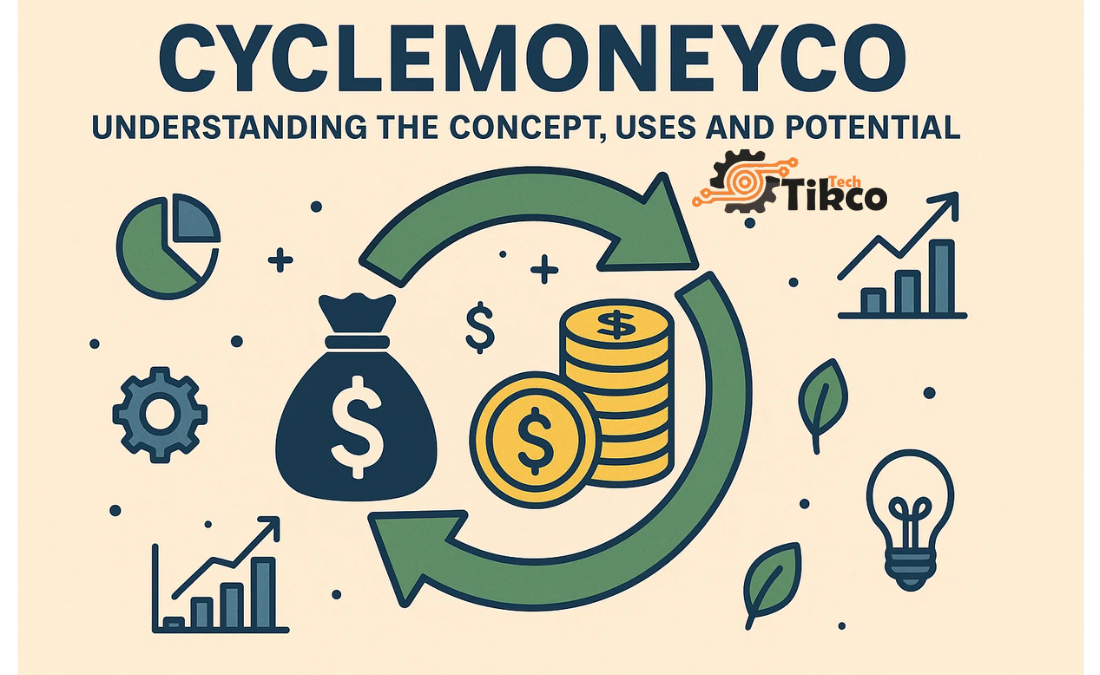
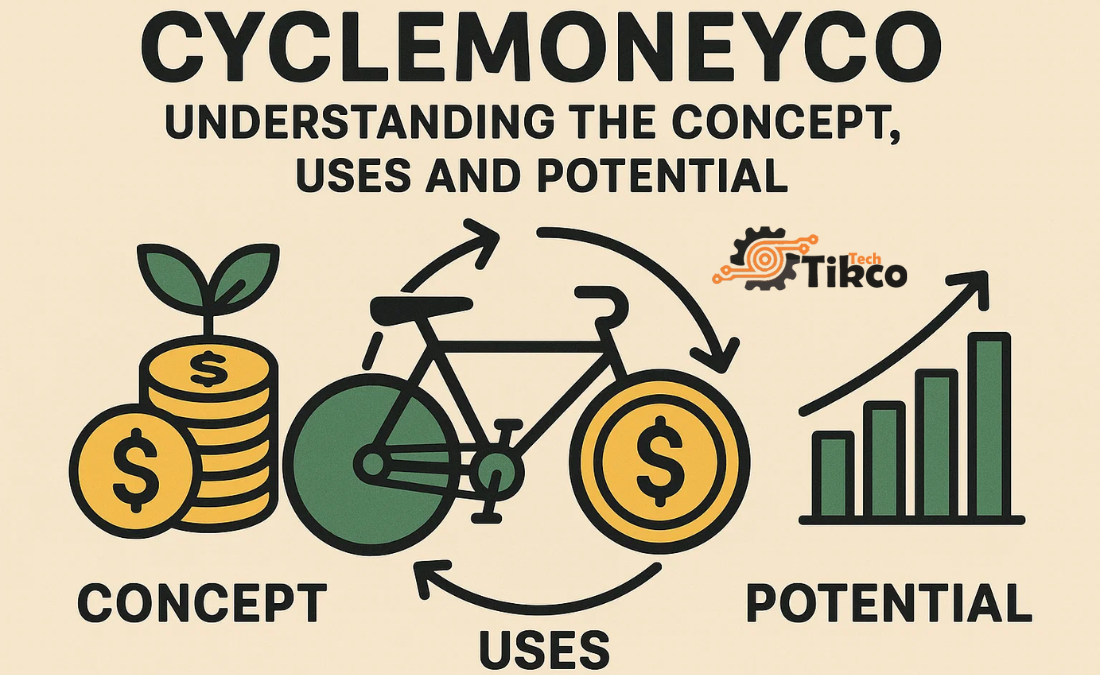
At its core, Cyclemoneyco appears to be a concept or brand that links the ideas of “cycle” and “money” — i.e., how funds flow, recur, and are managed in a cyclical way. According to one article:
“Cyclemoneyco is more than just a phrase—it represents a system or framework where cycles and money intersect. … The structured nature of cyclemoneyco highlights how money can move in patterns, reflecting the balance between earning, spending, saving, and reinvesting.
Another article describes “Cyclemoneyco Cash Around” as a “financial ecosystem that helps in money management and money movement.
In simpler terms:
- “Cycle” here refers to repetition, flow, movement — e.g. cash flow, recurring payments, reinvestment.
- “Moneyco” suggests a company or platform (the “co”) or a concept (“money co.”) specialised in the handling of money.
- Combined, the term suggests a system that manages, circulates and perhaps multiplies money by leveraging recurring or cyclical financial processes.
So while it may not (yet) be a widely‑known brand or company in traditional finance, it is positioned as a modern financial tool/concept for managing money in a cyclical fashion.
Why Cyclemoneyco matters today
There are several reasons why this idea has relevance:
- Recurring revenue models – Many businesses today depend on subscription models, memberships, service contracts. Having a structure like Cyclemoneyco helps to visualise and manage these recurring cycles of income and expenditure.
- Cash flow management – For both individuals and organisations, money isn’t simply earned then parked. It needs to move, be invested, be managed. Cyclemoneyco emphasises that money should be “moving” rather than stagnant.
- Digital finance and modern ecosystems – With the rise of fintech, digital wallets, peer‑to‑peer payments, and global flows of money, frameworks like Cyclemoneyco help capture the new paradigms of money movement.
- Predictability and planning – Understanding the repeating cycles in finance (earn, spend, save, reinvest) enables better forecasting, budgeting, and strategic planning for the future.
In short: The traditional “money comes in, money sits in bank, maybe used later” model is shifting. Cyclemoneyco reflects a more dynamic, active model of money.
How Cyclemoneyco works (or is claimed to work)
Based on the available descriptions, here’s a breakdown of how Cyclemoneyco is purported to work:
Key components
- Digital wallet / money movement platform: Users can send, receive, transfer funds with minimal delays.
- Cycle or flow engine: The system encourages money not to sit idle, but to flow—being spent, invested, reinvested. The “cycle” concept emphasises active use rather than passivity.
- Recurring / cyclical models: For businesses, tracking subscriptions or recurring income means the tool can model and manage the cycles of cash / finance.
- Insights and analytics: The system provides reporting, visibility into how money is moving, where cycles might be broken or leveraged.
Typical user flows
- An individual receives income (salary, freelance payment).
- Instead of simply placing it in a bank account and forgetting about it, the user uses Cyclemoneyco to allocate portions: immediate spending, saving, investing.
- Money flows through defined cycles: e.g., “X% goes to savings/investment”, “Y% reserved for recurring subscriptions”, “Z% for short‑term spending”.
- Over time, the system highlights cycle inefficiencies (money stuck, unused subscriptions, or missed opportunities for reinvestment) and suggests improvements.
- For business users: Track recurring income (subscriptions, memberships), map cash‑flow cycles (incoming, outgoing, reinvestment), optimise the cycles to maximise growth and minimise idle cash.
Value proposition
- Faster transfers, more flexibility, fewer delays.
- Better transparency and control over money movement and cycles.
- Strategic use of money via reinvestment rather than letting funds sink idle.
- In business: More predictable revenue, better planning and budgeting by leveraging cycles.
Who can benefit from Cyclemoneyco?
Because Cyclemoneyco is a flexible framework, several types of users might benefit:
Individuals
- Freelancers, gig‑economy workers: money may come in unevenly; having a system to track, cycle, and allocate funds helps stabilise their finances.
- People with recurring expenses/subscriptions: Cyclemoneyco can highlight waste (unused subscriptions), optimise spending.
- Savers and investors: By viewing their money as a cycle (earn → use → save/invest → re‑earn), they’re more intentional about reinvestment rather than hoarding.
Small businesses / SMEs
- Subscription‑based firms (software‑as‑a‑service, membership models): Cyclemoneyco helps map out recurring income cycles, project future revenue.
- Service companies: those with contracts, retainers — the cyclical model helps plan and manage finances month‑to‑month.
- Micro businesses: coffee shops, restaurants, local services — the tool helps manage cash flow and reinvestment to stay ahead.
Organisations & community projects
- NGOs and charities: funds may come in irregularly, be directed into cycles of spending/investing. Cyclemoneyco can help make the funds flow more effectively.
- Community projects with pooled resources: Shared money can be cycled for maximum effect rather than sitting idle.
Benefits of using Cyclemoneyco
Let’s summarise the key advantages:
- Improved liquidity and flow: Money moves faster, is utilised rather than sitting idle.
- Greater predictability: The cyclical structure allows users/businesses to forecast better.
- Enhanced financial control: Visibility into where funds are, where they cycle next, where bottlenecks occur.
- Reinvestment mindset: Encourages the view that money should be used, invested, then used again—creating momentum rather than stagnation.
- Flexibility across user types: Both individuals and organisations can apply the concept.
- Reduced waste: Identifies subscriptions or expenses that no longer fit the cycle, enabling cost savings.
Challenges and caveats of Cyclemoneyco
No framework is perfect—there are risks and considerations with Cyclemoneyco:
- Dependence on the cycle’s predictability: The model assumes recurring patterns (income, expenses). When unexpected events occur (job loss, economic downturn), the cycle can break.
- Complexity for beginners: Understanding cash‑flow cycles and mapping them into a tool may feel daunting for someone new to financial planning.
- Technology / platform risk: If the tool/platform is flawed, has security gaps, or lacks proper regulation, users may face risk (money loss, data breach) especially when moving funds.
- Over‑rigidity: If you treat the cycle too mechanically, you may neglect one‑off or discretionary spending which is also valid.
- Market/external shocks: Financial cycles can be disrupted by macro‑economic changes (inflation, recession, regulatory change) which a cycle‑based model may struggle to adapt quickly.
How to implement Cyclemoneyco in practice
If you’re intrigued by the Cyclemoneyco concept and want to apply it, here’s a step‑by‑step guide:
1. Map your current finances
- List all income streams (salary, freelance, rental, etc).
- List recurring expenses (subscriptions, rent, utilities, subscriptions).
- List non‑recurring or discretionary expenses (vacations, one‑off purchases).
- Chart how money flows currently: earn → hold → spend → save/invest.
2. Define your “money cycles”
- Decide how often you want money to “cycle” (monthly, quarterly).
- Allocate portions of income into categories: spend, save/invest, reinvest (business or personal growth).
- For businesses: define revenue cycle, expense cycle, reinvestment cycle.
3. Choose or build your tool
- If Cyclemoneyco is available as a platform/tool, assess it for fit: fees, security, features.
- If not, use existing tools (spreadsheets, budgeting apps) and apply the cycle‑based logic.
- Ensure you can track funds, see movement, and report on cycles.
4. Automate where possible
- Set up recurring payments for subscriptions so you don’t forget.
- Set automatic transfers for savings/investments.
- Use alerts/reminders for when money is “stuck” and not cycling.
5. Monitor and adjust
- Review monthly or quarterly: Is money flowing as outlined? Are there bottlenecks (money sitting idle)?
- Are your cycles still valid? Has an income or expense changed?
- Adjust cycle proportions based on performance and life/business changes.
6. Reinforce the reinvestment mindset
- Use part of freed‑up money for growth (e.g., business expansion, new investment, education).
- Avoid simply moving funds and letting them sit; the idea is active cycling.
7. Be ready for disruptions
- Build buffer/safety net for when incomes are disrupted.
- Maintain flexibility: cycles are guidelines, not rigid rules.
- Keep an eye on external economic factors that may require cycle adjustment.
Real‑world considerations and scenarios
Scenario: Freelancer
A graphic designer receives fluctuating income. They use Cyclemoneyco logic:
- 50% of each payment goes into “Immediate Expenses” (pay bills, rent).
- 30% goes into “Savings/Investments”.
- 20% goes into “Reinvestment/Growth” (new courses, equipment, marketing).
By doing this, the money doesn’t sit idle; each payment begins a cycle.
Scenario: Small subscription‑business
A SaaS startup has monthly subscription income. They apply Cyclemoneyco:
- Monthly revenue → 60% operating expenses → 20% reinvestment (product dev) → 20% growth (marketing, new market).
They track monthly so they know exactly how funds move and can forecast the next quarter based on past cycles.
Scenario: Community NGO
A non‑profit receives irregular donations. Using Cyclemoneyco:
- Donations flow into: 40% program expenses (immediate use) → 30% reserve/fund for future cycles → 30% capacity‑building and growth (training, infrastructure).
By visualising money cycling, the NGO avoids letting donor funds sit unused for long, and ensures future sustainability.
The future of Cyclemoneyco
Looking ahead, the Cyclemoneyco framework (and platforms implementing it) may evolve in several ways:
- Integration with fintech and blockchain: Smart contracts could automate cycles (e.g., when deposit arrives, automatically allocate into spend/save/invest pools).
- AI‑based insights: Machine learning may optimise cycle structure by analysing user/business behaviour and recommending adjustments.
- Global and cross‑currency cycles: Money cycling across borders (multicurrency wallets, international payments) will become more relevant.
- Circular economy overlap: The concept of resource cycling (not just money) – for example, funds tied to sustainable projects – may integrate with Cyclemoneyco’s logic.
- Adoption by larger enterprises: Beyond small business, large firms may use cycle‑based money flows for budgeting, investments, innovation pipelines.
- Regulation and security enhancements: As platforms proliferate, compliance, consumer protection, and data‑security will become key for trust and scalability.
Is Cyclemoneyco safe? What to watch out for
The idea of money cycling is compelling, but safety and prudence are essential:
- Ensure the platform (if using) is regulated and secure. Money movement always carries risk.
- Read the terms: Are there hidden fees, delays, restrictions on fund movements?
- Don’t treat cycles as guarantees. External economic events can disrupt flows.
- Keep a “stuck money” check: If funds are sitting unused for a while, revisit the cycle logic.
- Use trusted networks and avoid public WiFi or insecure connections when managing financial tools. (As one article warns: “When they are transferring the money … must stay away from the public WIFI connections because this can lead … hacking.”
Conclusion
The concept of Cyclemoneyco offers a refreshing way to think about money: not merely as something to earn and save, but as something to flow, cycle, and grow. Whether you’re an individual seeking better financial habits, a freelancer juggling income spikes and dips, a small business chasing recurring revenue, or a non‑profit managing donor funds — the cycle‑based model can add clarity, predictability and growth‑orientation to your finances.
That said, like any financial framework, it isn’t foolproof. It depends on accurate mapping of your income/expenses, regular monitoring, and responsiveness to change. The best results come when you combine the cycle mindset with excellent discipline, strong tools (or platforms), and awareness of external risks.
If you’re curious, start small: map your next payment, allocate it according to a “cycle”, monitor how it behaves. See how it feels. Over time you might find that money doesn’t just sit and stagnate — it moves, it grows, and it supports your goals more dynamically. And in that sense, Cyclemoneyco becomes less of a slogan and more of a habit, a system, and ultimately a financial advantage.